

















Indian mythology is filled with stories of gods, goddesses, heroes, animals and magical adventures. For generations, these stories have been passed down at bedtime, during festivals, at family gatherings and through songs, prayers and storytelling.
For children, they can be a wonderful way to begin discovering India's rich cultural heritage. And you don't have to wait until a child is old enough to understand every detail. A simple story, a familiar name, a repeated mantra or a favourite character can be a child's first introduction to these timeless tales.
Here are 10 Indian mythology stories that make a lovely starting point.
1. Ganesha and His Broken Tusk
Ganesha is known for his elephant head, kind nature and playful spirit. But behind his broken tusk is a tale of determination and finding a way forward.
According to one popular story, the sage Ved Vyasa asked Ganesha to write down the Mahabharata as he dictated it. Ganesha agreed, but with one condition: Vyasa had to keep narrating and Ganesha had to keep writing without stopping.
When Ganesha's writing instrument broke, he did not want the story to stop. So he broke off one of his own tusks and continued writing.
The story is often remembered as a tale of determination and dedication: sometimes, when something important needs to be done, we have to find a way forward.
2. Ganesha's Race Around the World
One of the most loved stories about Ganesha begins with a playful challenge.
Ganesha and his brother Kartikeya were asked to race around the world. Kartikeya immediately set off on his magnificent peacock.
Ganesha, riding his little mouse, knew he could never win a race around the world that way. So instead, he walked around his parents, Shiva and Parvati, three times.
When asked why, he explained that for him, his parents were his whole world.
Ganesha won the challenge, reminding us that sometimes wisdom means looking at a problem differently.
3. Krishna and Govardhan Hill
When Krishna was a child in Vrindavan, the villagers prepared to worship Indra, the god associated with rain and storms.
Krishna asked them to honour Govardhan Hill, the forests, cows and nature that supported their lives.
Indra became angry and sent heavy rain over the village. To protect everyone, Krishna lifted the enormous Govardhan Hill on his little finger and held it up like an umbrella.
The villagers gathered safely beneath it until the storm passed.
It is a story often associated with courage, compassion and respect for nature.
4. Krishna and Kaliya
The Yamuna River near Vrindavan was once believed to be poisoned by a huge serpent named Kaliya.
One day, young Krishna jumped into the river. Kaliya wrapped his many coils around Krishna, but Krishna soon freed himself and danced upon the serpent's heads.
Rather than destroy Kaliya, Krishna asked him to leave the river and return to the sea, allowing the water and the people around it to become safe again.
The story is a reminder that courage can also mean protecting others and restoring balance.
5. Hanuman's Leap to Lanka
When Sita was taken to Lanka by Ravana, Hanuman set out across the ocean to find her.
Standing at the shore, Hanuman initially doubted his own strength. Then he was reminded of the powers he possessed.
With renewed confidence, he took a mighty leap across the ocean and reached Lanka.
This is one of the most beloved stories of Hanuman and a beautiful reminder for children that sometimes we are capable of much more than we believe.
6. Hanuman and the Sanjeevani Mountain
During the battle in Lanka, Lakshmana was badly injured and needed a special healing herb called Sanjeevani.
Hanuman was sent to find it in the mountains. But when he could not identify the exact herb, he did something extraordinary: he lifted the entire mountain and carried it back.
The healing herb was found, and Lakshmana recovered.
It is a simple story about determination: when Hanuman did not know which solution was the right one, he found another way to make sure help arrived in time.
7. Durga and Mahishasura
Mahishasura was a powerful demon who had defeated many gods and brought chaos to the world.
To stop him, the gods joined their powers together and created Goddess Durga.
Riding a lion and carrying divine weapons, Durga faced Mahishasura in a fierce battle. After a long struggle, she defeated him and restored peace.
This is the central story behind Navratri and one of the reasons the festival celebrates the strength and power of the divine feminine.
8. Rama and Ravana
The story of Rama and Ravana is at the heart of the Ramayana and the celebrations of Dussehra.
Ravana, the king of Lanka, abducted Sita and took her to his kingdom. Rama, with the help of Lakshmana, Hanuman and an army of allies, travelled to Lanka to rescue her.
After a great battle, Rama defeated Ravana and rescued Sita.
The story is remembered during Dussehra, when Ravana's effigies are traditionally burned in many parts of India. It is often associated with the victory of good over evil and the importance of choosing the right path.
9. The Samudra Manthan
The Samudra Manthan, or the Churning of the Ocean, is one of the most fascinating stories in Hindu mythology.
The devas and asuras joined forces to churn the cosmic ocean in search of Amrit, the nectar of immortality.
They used Mount Mandara as the churning rod and the serpent Vasuki as the rope. As the ocean was churned, many extraordinary things emerged, including the goddess Lakshmi and the divine physician Dhanvantari carrying the nectar.
But before the nectar appeared, a deadly poison also emerged. Shiva drank the poison to protect the world, which turned his throat blue and earned him the name Neelkanth.
It is a story of courage, responsibility and protecting others.
10. Shiva and the Ganga
According to the story, the sacred river Ganga was meant to descend from the heavens to Earth. But her powerful flow was so strong that it could have flooded and destroyed the land.
Shiva stood beneath her and caught the force of the river in his matted hair, allowing the water to flow gently down to Earth.
The story depicts how selflessly Shiva uses his strength. Sometimes strength is not about showing power, but about using it wisely to protect and care for others.
This is why Shiva is often depicted with the Ganga flowing from his hair.
The story is a lovely introduction to the many ways Shiva is represented in Indian art, stories and traditions.
Bringing Indian Mythology Into Everyday Childhood
For young children, mythology can begin with familiar sounds, names and stories woven naturally into everyday moments.
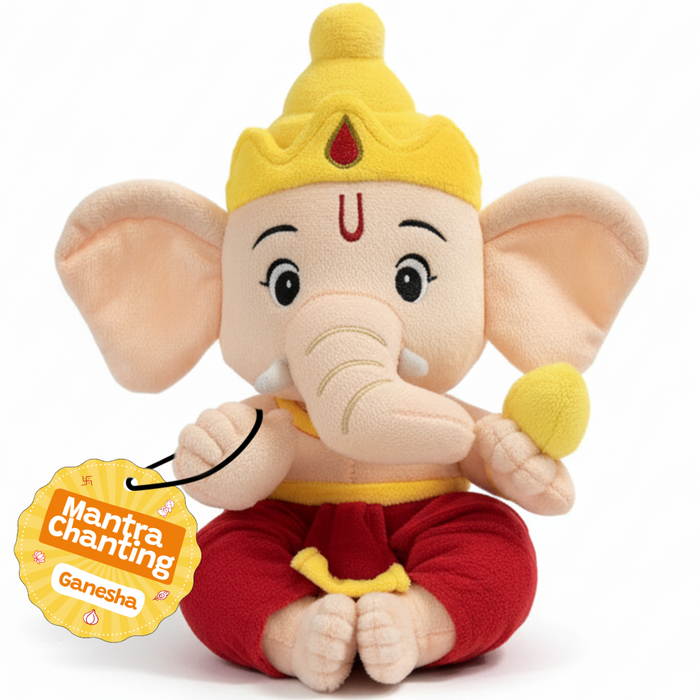
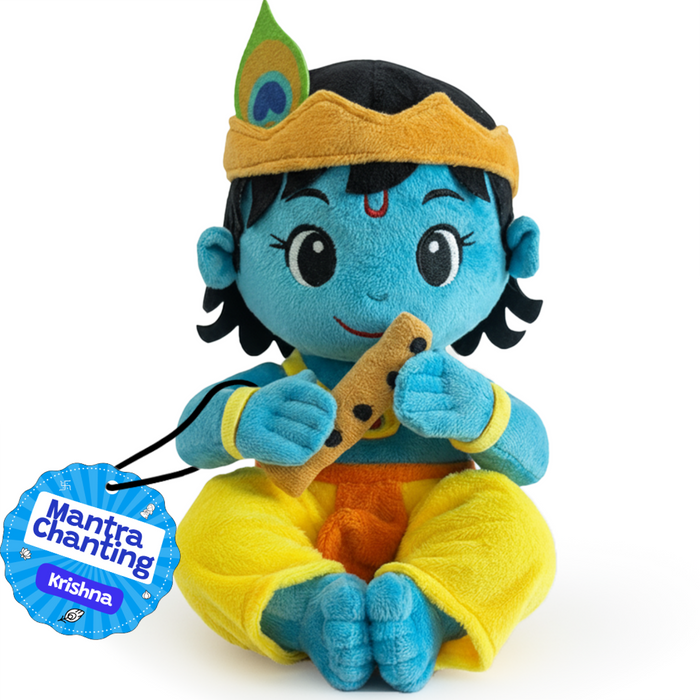
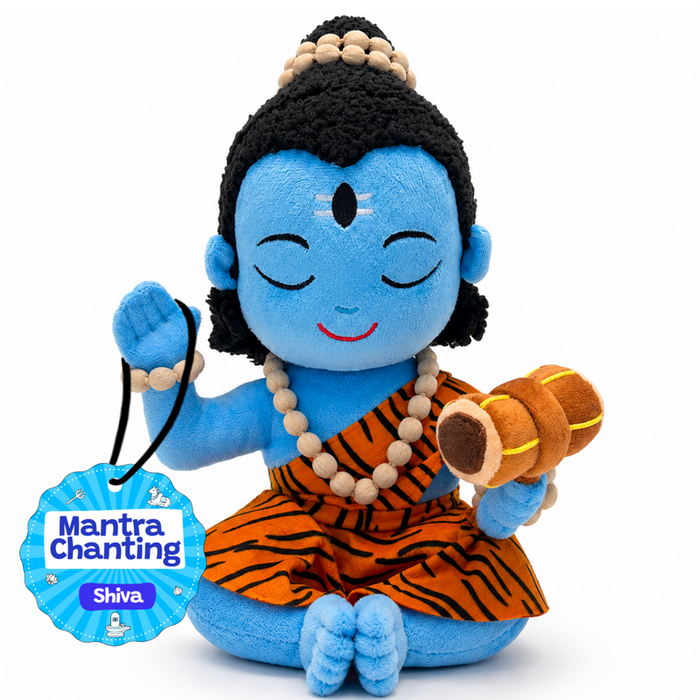
A devotional audio book like WonderBuddy’s Let’s Sing for Our Gods can introduce little ones to familiar mantras, aartis and bhajans, while Divine Plushies bring those same devotional sounds into moments like bedtime, quiet time or family prayers.
As children grow, these familiar sounds can become a bridge to the stories behind them and to the rich traditions they are part of.
The goal isn't to teach children every story at once. It is simply to give them a few stories to grow up with; stories they can hear again, ask questions about, and eventually pass on themselves.
More Stories, More Roots, More Wonder
Indian mythology has thousands of stories, and these ten are only a beginning. As children grow, each story can open the door to another: a new character, a new festival, a new tradition or a new question.
And perhaps that is what makes these stories so enduring: they grow with us.
0 टिप्पणी